Showing posts with label Travel Zanzibar. Show all posts

RUAHA NATIONAL PARK

0 comments


Ruaha national park is the largest national park in Tanzania. It is one of the few Tanzania’s famous wilderness area where one can have a rare experience of game viewing spiced up by the fascinating landscape. The park is rich of plants and animals such as Greater Kudu (Tragelaphus strepsiceros) which can not be found in any other national park. The park boasts of her almost untouched and unexplored ecosystem, making visitors’ safari experience very unique.


The Great Ruaha River as other rivers like Mwagusi, Jongomero and Mzombe save as the life line of the park. During dry season, these rivers become mostly the main source of water for wildlife. There are few natural springs saving the same purpose.


In the pick of dry season, elephants obtain water from dry sand rivers using their front feet and trunks. The remaining water falls along the Great Ruaha River are also important habitat for hippopotamus, fish and crocodiles.

Continue »

KATAVI NATIONAL PARK

0 comments


Katavi National Park in western Tanzania is remote and wild, a destination for the true safari aficionado. The name of the park immortalises a legendary hunter, Katabi, whose spirit is believed to possess a tamarind tree ringed with offerings from locals begging his blessings.

Despite being Tanzania’s third-largest park, Katavi sees relatively few visitors, meaning that those guests who arrive here can look forward to having this huge untouched wilderness to themselves. The park’s main features are the watery grass plains to the north, the palm-fringed lake Chada in the south-east, and the Katuma River. Katavi boasts Tanzania’s greatest populations of both crocodile and hippopotamus. Lion and leopard find prey among the huge populations of herbivores at Katavi – impala, eland, Topi, zebra and herds of up to 1,600 buffalo wander the short grass plains.

The rare, honey-coloured Puku antelope is one of the park’s richest wildlife viewing rewards. A kaleidoscope of birds flit across the riverbanks, swamps and palm groves while flotillas of pelican cruise the lakes and elephants graze waist-deep in the marshlands. Katavi is best visited in the dry season between May and October, December and February.

Continue »

SAADANI NATIONAL PARK

0 comments


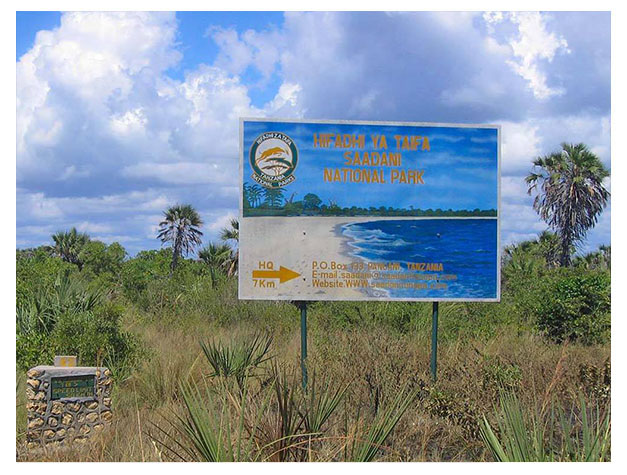
Located in the centre of the historic triangle of Bagamoyo, Pangani and Zanzibar, Saadani National Park covers 1100km square. It is the only wildlife sanctuary in Tanzania bordering the sea. The climate is coastal, hot and humid. It offers a unique combination of both marine and mainland flora and fauna in a culturally fascinating setting. About 30 species of larger mammals are present as well as numerous reptiles and birds. Besides many species of fish (over 40), green turtles, humpback whales and dolphins occur in the ocean nearby Gazetted in 2005, it encompasses a preserved ecosystem including the former Saadani game reserve, the former Mkwaja ranch area, the Wami River as well as the Zaraninge Forest. Many villages exist around the boundaries of the park. Before being included in the national park, the Zaraninge forest was managed by the World Wide Fund for nature (WWF) whose goal was to preserve the extremely high botanical diversity of one of the last coastal rain forests remaining in Tanzania.


Continue »

KILIMANJARO NATIONAL PARK

0 comments


The great mountain of Kilimanjaro is a metaphor for the compelling beauty of East Africa. Rising in absolute isolation at 5,895m (19,336ft) Kilimanjaro is one of the highest walk able summits on the planet and a beacon for visitors from around the world. Just three degrees south of the equator, Kilimanjaro’s great peaks of Kibo and Mawenzi are nonetheless covered all year round with snow and ice. Most reasonably fit and properly guided climbers can experience the triumph of reaching the crater rim with little more than a walking stick, warm clothing and determination. Those who reach Uhuru Point , the actual summit, or Gilman’s point on the lip of the crater. (Kilimanjaro is a dormant, but not extinct, volcano) will have earned their climbing certificates and their memories

Continue »

TARANGIRE NATIONAL PARK

0 comments


During Tarangire’s dry season, day after day of cloudless skies seem to suck all moisture from the landscape, turning the waving grasses to a platinum blonde, brittle as straw. The Tarangire River is a mere shadow of itself, just a trickle of water choked with wildlife, thirsty antelope and elephant have wandered hundreds of parched kilometres to Tarangire’s permanent water source.

Herds of elephant three hundred strong dig in the damp earth of the riverbed in search of underground springs, while wildebeest, zebra, buffalo and gazelle mingle with rare species such as eland and oryx around each shrinking lagoon. Python climb into the shade of the trees that line Tarangire’s massive southern swamps and hang there like giant malignant fruits, coils neatly arranged over the branches in a perfect sphere.


Tarangire in the dry season enjoys the greatest concentration of wildlife outside the Serengeti ecosystem. Tarangire’s huge herds of elephant rival the park’s gigantic, squat baobab trees as its most celebrated feature – ancient matriarchs, feisty young bulls and tiny, stumbling calves are ever present to fascinate visitors with their grace, intelligence and majesty. The best time to visit Tarangire for wildlife viewing or walking is the dry season, from June to October.

Continue »

Zanzibar Hotels "AZAO RESORT & SPA"

0 comments

Situated on the shore of the Indian Ocean, Azao Resort & Spa offers guests a relaxing getaway in Pongwe, Zanzibar. The resort features an outdoor swimming pool and free WiFi in the public areas. Each room at Azao Resort & Spa is air-conditioned and equipped with a mosquito net, a seating area and a flat-screen TV with satellite channels. 

They each have a private bathroom with a shower. Some rooms feature a balcony and sea views. Guests can enjoy a meal at the restaurant, or relax with a drink at the pool bar. A variety of activities are available in the surrounding area, including snorkelling, diving and kite surfing. Other facilities at Azao Resort & Spa include a spa and wellness centre and a fitness centre. 

The resort features a 24-hour front desk, a gift shop and luggage storage facilities. Zanzibar City is within 32 km of Azao Resort & Spa, while Nungwi is 45 km away. Zanzibar International Airport is 35 km from the property.

Continue »

Things to know before you visit Zanzibar.

0 comments

Zanzibar isn’t like the mainland. The semi-autonomous archipelago is a 23
-mile hop from mainland Tanzania, and although it is officially part of the East African country, in almost all aspects—politics, religion, culture, food—life there is different. As a base for traders from the African Lakes region, India, and the Arabian peninsula, Zanzibar became a hub for the region’s slave and spice trades. Most Zanzibaris consider themselves Zanzibari rather than Tanzanian, and their territory has its own leader and governing bodies. Mainland Tanzania is a mix of Christian, Muslim, and indigenous groups, but Zanzibar, which the Sultanate of Oman ruled for centuries, is almost entirely Muslim. (The Sultanate had in turn wrestled the islands from the Portuguese – and much later they became a British protectorate, until Zanzibar’s independence in 1963.)
Get on Swahili time. Time-keeping is initially confusing, but actually makes a lot of sense. In Swahili culture, people start counting time at sunrise rather than at midnight, which means that 7 a.m. Western time is one o’clock in the morning Swahili time, and 7 p.m. is one o’clock at night. (This works because sunset and sunrise times are relatively constant year-round, since Zanzibar is so close to the equator.) A trick to decipher this code is to imagine drawing a line directly across a clock face: three becomes nine, four becomes ten. When arranging meeting times, it’s best to specify the time of day you’d like to meet—morning, afternoon, evening, night—that way, even if your numbers are off, chances are you’ll still connect.


Plantains for sale on the street in Stone Town. Photo by: Megan Dolski

Don’t fear the (high-speed) ferry. Transit to Zanzibar happens by plane or boat, most likely departing from Dar Es Salaam. The plane ride involves about half an hour of cruising in a shaky Cessna, but the ferry is cheaper and can be a far more pleasant experience. The high-speed boats run four times a day each way, take about two hours, and a ticket will run you less than half of what it costs to fly. Don’t be deterred by exaggerated travel advisories mentioning capsizing vessels—the high-speed boats are safe, modern, and comfortable. Oddly, the 2013 movie Captain Phillips—a Hollywood retelling of an actual 2009 Somali-pirate hijacking—is often the preferred on-board entertainment. If it’s nice out, or you’re prone to seasickness, the top deck is breezy and has the best views.


An Indian Ocean view from the shores of Stone Town. Photo by: Megan Dolski

Greetings matter. Stop and say hi: Swahili is an easy language to pick up, and the initial learning curve is quick. Learning just the basics will take you pretty far. Don’t assume the constant streetside attention from people is an attempt to sell you something, or trap you into taking some sort of tour—that does happen, but saying hello is also an important part of the local culture. The “Mambos” and “Jambos” are often just that, so it’s a good idea to say hello back. It might be initially overwhelming, but it’s nice to realize that so many strangers will take the time to acknowledge your presence and ask you about your day. (A “Shikamoo”, usually reserved for those you don’t know, your elders or superiors, is a respectful greeting that locals will appreciate.)


The sun sets over Zanzibar’s ancient city. Photo by: Megan Dolski

Get lost in Stone Town. The ancient city—declared a UNESCO cultural heritage site in 2000—is charming, but it’s basically a maze. The act of receiving directions through the town’s winding alleys usually involves a series of confusing hand gestures and head nods, and will probably not get you where you want to go any faster. There are street names, sort of, but no one really uses them. The bright side is that Stone Town is small and safe, and not knowing where you’re going is part of the experience. Locals are helpful, so you can ask for directions as many times as you want, but sometimes it’s best to let yourself get lost.


Photo by: Joshua Kehn

Island life is slow. In Zanzibar, life moves pole pole – Swahili for slow. Things in Zanzibar don’t always make sense, don’t always work, or can take a while. It’s important to enjoy the calm chaos and take a cue from the unhurried pace. Your smoothie might take 45 minutes to show up, but it will be delicious and worth the wait. Lazuli, a tiny but wonderful restaurant in Stone Town is a good place to experience this.


Keeping up with Premier League football in Stone Town. Photo by: Fabulous Fabs

Choose your own adventure. Zanzibar has become host to a handful of East Africa’s most posh luxury resorts, which can be a jarring contrast to what is an otherwise quiet, economically-challenged island (the average Zanzibari makes less than $1 a day). If you’re looking for a beach escape with other Westerners, head north to Nungwi and Kendwa, where you’ll find the same all-inclusive packages and beach discos you’ll find in most other warm parts of the world. For a slightly more Zanzibari experience, try quieter towns like Bwejuu or Jambiani where your slice of island paradise is mixed with the rhythms of village life.
Zanzibar has two rainy seasons. Every year, there are the long rains and the short rains. On the heels of the blazing and seriously sweaty East African summer, Zanzibar’s long rainy season lasts roughly from March until May. Booking a trip during this period if you’re set on a beach holiday is not a good idea; the islands get hit with some pretty epic monsoons that will quite literally dump on your beach time. The short rains generally take place between November and December, but aren’t nearly as intense—they tend to show up in short and torrential bursts, then quickly fade back to blue skies.


Sidewalk groceries in Stone Town. Photo by: Megan Dolski

Taste the world. Zanzibar has had many rulers over the centuries, and its long, tragic history has created one of Africa’s most interesting cuisines. This is the original fusion food, a delicious mash-up of Indian, Arab, Chinese, Portuguese and African cooking traditions, all driven by the constant presence of spice (these are known as the Spice Islands, after all, where cloves, cinnamon, black pepper and nutmeg come straight from the source.) Try African ugali, Indian chapatti, Swahili curries, and eat as much fresh seafood as humanly possible. Look for island specialties like octopus curry and urojo, a turmeric and coconut-based soup with crispy fritters and spiced potatoes that seems to have the island’s entire history contained within its broth. If you want to try these recipes at home, head to Darajani market, the main Bazaar, where locals shop for groceries – but get there early, before the heat rolls in.


Fresh street-side chapati, wrapped in morning news. Photo by: Megan Dolski

Egg yolks are white, not yellow. Across Zanzibar, and many parts of mainland Tanzania, breakfast options are egg white or egg white—even when the yolk is included. There’s nothing wrong with them, it’s just that yolks are never a sunny yellow. They don’t taste different; chickens here feed on a grain that makes them produce monochrome eggs. The sorghum chickens eat across Tanzania has less pigmentation than the yellow maize fed to chickens in other parts of the world.
BYO common sense. In Zanzibar, it’s possible to drink, and it’s fine to wear beach clothes in the right places. That said, there are times and places when neither is appropriate. Skimpy clothing and drunken slurring through Stone Town is best avoided. There are a few bars in Stone Town, and you can drink in tourist and ex-pat restaurants and in fancier hotels in town and on the coast, but remember that the waiter serving you probably does not drink, so cut them some slack if their wine-bottle opening isn’t the most graceful. There are only a couple stores in Stone Town that sell booze, and it’s a good idea to bring your own bag so you’re not brandishing a bottle of gin on the streets.


Photo by: Martijn Munneke

Take time for tea. Drinking culture is not just for rooftops and beach bars. The local tea scene is a good way to meet people that actually live on the islands, not simply passing through. Try the tangawizi (ginger) chai, and add vanilla if possible. Grabbing a mug of hot and spicy tea on the side of the road is a good way to people watch. Most tea stands or carts start serving once the sun has gone down. If you’re in Stone Town, ask around for the nearest Babu Chai, and someone should be able to point you in the right direction.
There are no lions, elephants, or giraffes. Tanzania is known for its breathtaking safaris, but this is not the Serengeti: the wildlife is all underwater. If you make it to the islands, try and hit up one of the many dive centers offering scuba diving training courses, and of course views of the Indian Ocean life and coral. But be warned that overfishing and a lack of environmental oversight have compromised many of Zanzibar’s best reefs. Some of the best snorkeling can be had on Chumbe Island, a protected marine park about a ten-minute drive and 45-minute boat ride out of Stone Town. The day trip is considerably more expensive than the cheap packages offered on the street, but the money goes to paying a world-class staff of locals and to restoring some of Zanzibar’s more fragile ecosystems. (Not to mention an incredible lunch and some of the best snorkeling in East Africa.)


A view from the port in Stone Town. Photo by: Megan Dolski

Come out at night. Stone Town can look spooky at night when you first arrive—the dimly-lit collection of narrow streets and back alleys doesn’t exactly invite aimless wandering by the uninitiated. But don’t let the eeriness and travel advisories calling for extra caution after dark keep you confined to your room after sundown. Stone Town is bustling with life in the evenings, with kids out playing, couples strolling, and everywhere people feasting. The central park-turned-night market, Forodhani Gardens, is packed with locals and tourists sampling the couple dozen fresh food stalls. Skip the skewers of shellfish, which may have been sitting out all day, and opt for grilled Indian spiced chicken and Zanzibar pizza, chased with fresh sugar cane juice.


Continue »

Zanzibar Foods and Drinks for tourist from all around the world

0 comments


It’s hot here most of the year. You should drink at least one big bottle (1.5 ltr) of water a day. Tap water is fine for brushing your teeth but not suitable for your stomach. You get bottled water at the hotel or anywhere else on the island. Many hotels now have water dispensers in their restaurants with purefied water. The cost is much less than bottled water – and you contribute to protect the environment.

Try a fresh coconut, it is rich in antioxidants. What you most probably know as coconut milk is in the freshly opened fruit actually more coconut water, delicious though, and the white “flesh” inside is very soft and easy to eat. Anyone in the village will climb up a coconut tree for you and get you a fresh coconut, opens it chop chop (I still haven’t mastered that) and you drink it.

Beer drinkers will love this: Tanzania was a German colony. There must have been a few Bavarians amongst them since we have excellent beer in Zanzibar (and yes, I originally come from Munich!). The most popular brand is the “Kili” (Kilimanjaro), followed by Safari, Serengeti (the purest of the beers, without cornstarch), Tusker (all in 500 ml bottles but more hotels seem to stock nowadays the 350 ml bottles) and the “gourmet” Ndovu (350 ml). The locals drink beer “moto” (warm) – iiiieeehhhh! Locals will love it when you order your beer in Swahili: Kili moja baridi (one cold Kili) or “baridi sana” (one very cold Kili). Numbers: 1 = moja, 2 mbili, 3 tatu, 4 nne, 5 tanu, 6 sita, 7 saba, 8 nane, 9 tisa, 10 kumi. Please do not drink and drive!!! Strictly forbidden here.

Wines and bubbly are mostly imported from South Africa. Depending on the hotel or resort you stay, there may also be French or Italian brands. You MUST try the cocktails! Either with alcohol or virgin. There is also a large selection of spirits available. The locals drink Konyagi (sort of Gin but purely chemical, better stay away from it). The fruit juices at the hotels are usually freshly made, simply delicious.

Food: The seafood you eat at dinner most probably still swam in the ocean in the morning. It ain’t get fresher than here. Look out for “catch of the day” offers.

NB: Some of our seafood species should not end up on a plate because of their important role for our coral reefs / slow growth / over fishing etc. The Chumbe Island Team put together a beautiful pdf document with colour pictures “Sustainable Seafood Guide 2017” and a short explanation of each species, separated into Good Choices, Choices with Caution and Avoid eating. I gladly send it to you, just drop me an email (zanzibargaby@gmail.com).

In case you cannot open a pdf file, herewith the seafood species that one should avoid eating – the local name is in brackets:
– Parrot fish (Pono)
– Grouper (Chewa)
– Reef (red) Snapper (Janja, Fatundu, Tembo, Mbawa)
– Emperor (Changu)
– Spiny Lobster (Kambakochi)
– Sharks and Rays (Papa and Taa)
Thank you very much for making wise choices for a sustainable future of our seafood species.

Beef is imported frozen from Tanzania, Kenya or South Africa, the same applies to chicken. Meat is served with the typical Zanzibar Pilau rice or any other conceivable way rice can be cooked, or with potato chips/French fries/pommes (for the Germans, jawohl). If you have a chance, try to eat goat. The Zanzibaris know how to cook it, yummy!!!

Potatoes, tomatoes, carrots, green peppers, cabbage, spinach, onions etc are mostly grown on Zanzibar.

And then there is the fruit: bananas, sweet (not acidy) pineapples, mangoes, mandarins, oranges, passion fruit, water melon, paw paw, avocado, jack fruit (in terms of physical appearance it tends to look similar to durian, but the jackfruit has a rough pebbly shell while the durian has a spikey shell. The insides look very much different, and the tastes are vastly different too, the jackfruit is more of a sweetish fruit) etc etc – fresher than you most probably ever had them before. If you buy fruit at the market, the motto “peel it, boil it or avoid it” applies.

Please refer to the chart above for the seasons of our delicious fruits.

Continue »

How to get here / Visa / Zanzibar International Airport

0 comments


Getting here from overseas

Direct flights to Zanzibar:
Emirates/FlyDubai combo, Condor, Ethiopian Airways, Kenyan Airways, Oman Air, Qatar Airlines, KLM, Turkish Airlines, Mango, South African Airways/Precision Air combo, Air Tanzania. This list might not be complete.

Getting from Dar es Salaam to Zanzibar:
Insider info: The airport is on the outskirts of Dar es Salaam quite a distance from the Harbour/Ferry Port which is in the center of Dar. Traffic in Dar is horrendous, it can take you 2 hours or longer by taxi from the airport to the ferry port (the distance could be done easily in 30 min if there were no traffic). The taxi will cost anything from US$ 30 upwards to the ferry port. Make sure you agree on the taxi fare before you get into the taxi!

By plane: Several local airlines offer flights from Dar to Zanzibar (the flight time is 20 minutes): www.precisionairtz.com, www.zanair.com, www.coastalaviation.co.tz, www.tropicalair.co.tz, http://www.flightlinkaircharters.com, http://www.fly540.com, to mention a few.

Zanzibar International Airport was supposed to be replaced by a new, much larger airport but construction work was halted more than three years ago, nobody really knows why. For the time being we are stuck with the old airport (see photo below), which in the meantime was upgraded a bit.
Immigration: Some airlines hand out forms on the plane to be completed. If not, you need to complete it in the arrivals hall. When you made it to the top of the queue at immigration, your visa is processed and a photo of you as well as fingerprints are taken, this only takes a few minutes. After you got your luggage from the conveyor belts everything will be scanned. Please make sure you don’t have any plastic bags in your luggage, except zipblock bags, since they are banned on the island. In case you want to exchange money, you can do so while you wait for your luggage although you usually get better rates at the exchange bureau at the parking lot.
In order to avoid any stress at departure: check in well in advance, minimum is two hours before departure! After the initial queue to get into the departure hall, your luggage/bags are scanned. If the airport staff see anything suspicious on the scan they will ask for the suitcase to be opened and it will be throughly checked. Do not pack any aerosol sprays in your luggage, for example. They will be confiscated. Then you join the queue at the check-in counters. Fortunately, this hall nowadays has aircon. If needed, toilets are up the staircase on the 1st floor of the departure hall, at the far left of the restaurant. Then you proceed to another hall, produce your boarding pass and passport and fill in the immigration forms. Toilets are at the end of that hall. Around the corner you find the immigration counters and thereafter your hand luggage is scanned again. Now you made it into the boarding hall, which has aircon. Here you find a duty free shop and some kiosks where you can do your last shopping. At the end of the hall (walk around the corner) you find a small kiosk for snacks and coffee, fridges with cool drinks and water. There are also toilets in that section.


By ferry: www.azammarine.com is the ferry of choice! You can book online. The ferry takes about 2 hours to reach Zanzibar.

VISA
Since November 2018, an official tourist visa can be applied for online
https://eservices.immigration.go.tz/visa This is the only official website. Please only use this website for your visa application! Other companies or agencies are far more expensive and I even heard of cases were applicants lost the money they paid.

NB: The new e-visa facility is still in its infancy. According to posts on Tripadvisor people still didn’t get their e-visa 2 weeks after applying and paying for it. Email queries are not replied to. It might be better for the time being to apply for your visa on arrival.

Visa exemptions for stays of less than 3 months: for a complete list of countries check above webpage, section “guidelines”

You can also get your visa for stays of up to 3 months on arrival at the Zanzibar International Airport*. They are equipped with cameras and laser fingerprint check. You need a valid passport and the completed visa form to apply for it. The visa costs US$ 50 per person (adults and children), for US citizens US$ 100. Immigration is open day and night.

Payment for the visa is in cash or by credit card**. If you bring cash, they apparently only accept US$ 50 notes, new notes only (US$ notes 2013 or after). No other currencies are accepted, only US$!
**As per feedback received from tourists, sometimes the counter for the credit card payments is closed. And every other day, US$ cash is not accepted, only credit cards… Rather bring both, credit card and US$ cash, just in case.

Please make sure that your passport is still valid for 6 months from the date of departure from Zanzibar!

*Some rumours are floating around that visa can only be applied for online and that the visa facility on arrival at the airport was closed. This is not true. The visa application facility on arrival is still open and there are no plans to close it! (February 2020)


Continue »

Malaria, Yellow Fever Vaccinations, Medical Care/Hospitals in Zanzibar

0 comments

Malaria, Yellow Fever Vaccinations, Medical Care/Hospitals


MALARIA
Zanzibar is not an official Malaria area anymore. It is up to you to take Malaria prophylaxis or not. Do bring Mosquito repellent and drink lots of Tonic water (Mosquitos hate the smell of chinine in the tonic water which your skin somehow gives off). If you drink alcohol, enjoy a gin tonic at sunset (gin also contains chinine = double dose of chinine) – the gin tonic is only to keep the Mosquitos away of course 🙂
In the hotel rooms, you have mosquito nets and staff usually spray the rooms at night when they get your bed ready.

YELLOW FEVER VACCINATION
Officially, a yellow fever vaccination is only mandatory if you arrive from yellow fever endemic countries. It is not required if you arrive from any other countries. Please see official confirmation letter of the Zanzibar Ministry of Health below, dated 10 August 2017.
Having said that: When I returned from a trip to South Africa with Kenya Airways, via Nairobi (transit only), everyone was asked for the yellow fever certificate! In case you are coming from Kenya, transit or not, rather have the yellow fever certificate. It is a good idea anyway to get that shot since you are covered for life then. There is still no cure in case you get yellow fever!


As to the recent reports on “Cases of Undiagnosed Febrile Illnesses – United Republic of Tanzania” please read https://www.who.int/csr/don/21-september-2019-undiag-febrile-illness-tanzania/en/


MEDICAL CARE / HOSPITALS
In case you should require medical attention, we have so-called Clinics in the bigger villages that are run by qualified nurses, they can also administer antibiotics if needed.

Alternatively, I recommend Tasakhtaa Global Hospital in Vuga, Stone Town. It has modern equipment (which is not the norm on the island), excellent doctors (mainly from Ukraine and India) and an emergency section: http://www.tasakhtaahospital.co.tz
Reception for making an appointment: +255 (0) 24 223 2341
Emergencies: +255 (0) 24 223 2222, if you need an ambulance +255 (0) 779 770 577

General Practitioner: ZanAid Clinic in Mbweni/Stone Town, about 2km from the airport. Please rather make an appointment beforehand: +255 777 777 112 or mail@zanaid.org or book an appointment online http://www.zanaid.org

URBAN CARE CLINIC in Fumba Town/south of Stone Town. Dr. Jenny Bouraima is excellent, she speaks English and German. They have their own laboratory on the premises. http://www.urbancare.clinic +255 622 820 011 Facebook: Urban Care

Should you get sick in a coastal area, best contact the manager or reception of your place of accommodation, they should have the numbers of the nearest medical practitioner

Pharmacies: Shamshu (best selection) and Izmir Pharmacies, both in Darajani/Stone Town, behind the fish/meat market building, and at Global Hospital

In the rural areas, there are small Dawa (Kishwahili for medicine) shops, but they are badly stocked.

I suggest that you bring an emergency travel kit (especially antibacterial ointment) which you could donate to the local clinic when you leave, it will be much appreciated.

Continue »